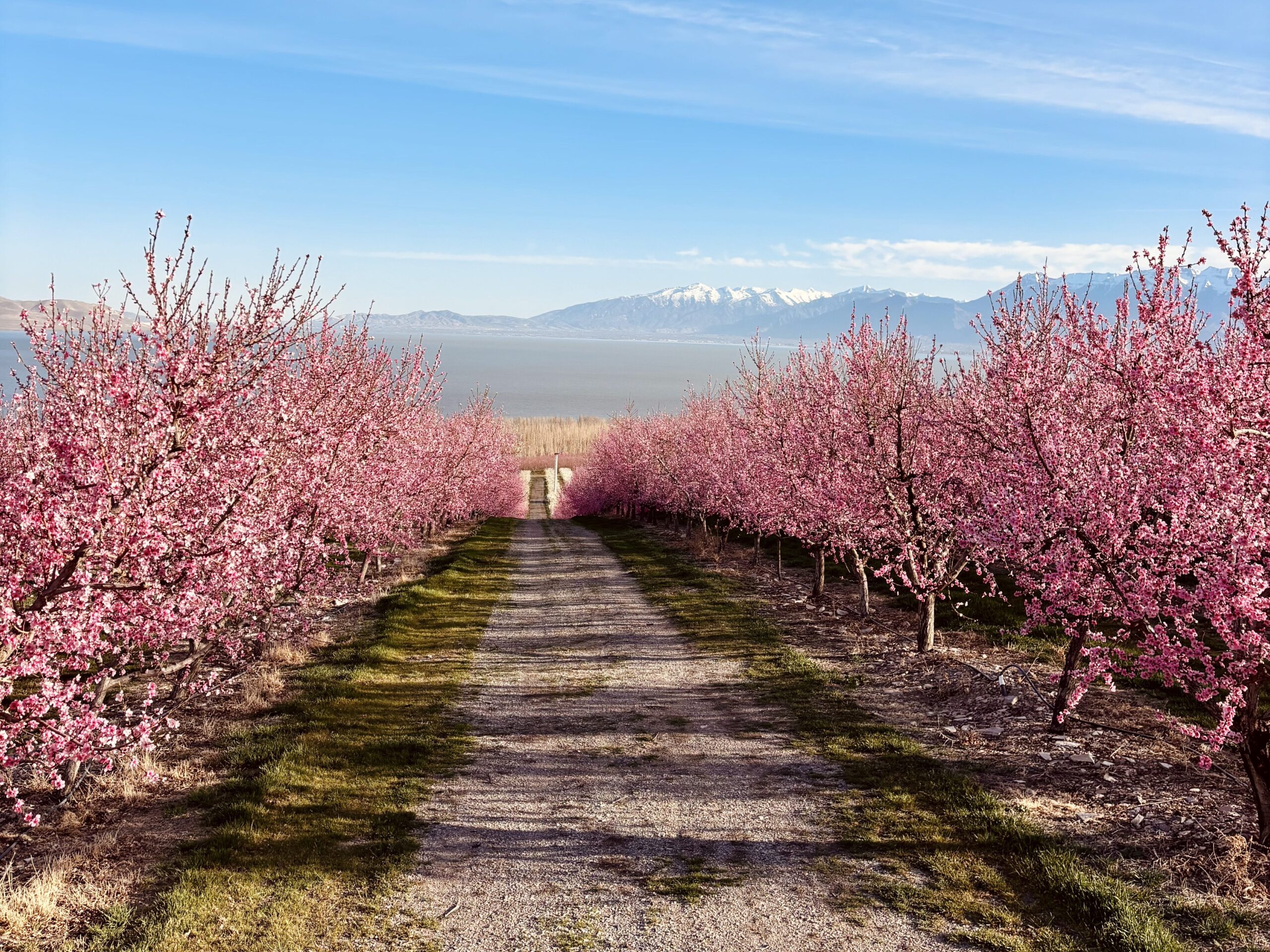
Spring in Utah is a season of hope—and high risk—for fruit farmers. As orchards burst into bloom, delicate blossoms signal the promise of peaches, cherries, apples and other tree fruit to come. But in Utah’s climate, that promise is fragile. A single late frost, a sudden cold snap, or erratic weather can wipe out an entire crop overnight. To protect their orchards, Utah fruit growers rely on a mix of smart planning, hands-on techniques, and modern tools.
❄️ Fighting Frost in Real Time
When frost threatens, orchardists spring into action—often in the middle of the night.
- Wind machines are used to circulate warmer air from above down into the orchard, raising temperatures just enough to protect blossoms.
- Overhead sprinklers coat buds with a thin layer of ice. While it sounds counterintuitive, the freezing process actually releases heat, keeping the plant tissue from dropping to damaging temperatures.
- Some farmers also water the soil before a freeze, since moist ground retains heat better than dry soil.
- Smudge pots or propane heaters are also placed in the orchard to raise temperatures during a cold spell.
- Some farmers will use blossom protectant sprays that are high in potassium which will protect the blossom and give it an extra two to three degrees of protection.
These methods can be labor-intensive and costly, but they are often the difference between a harvest and a loss.
🌬️ Working With the Landscape
Utah farmers understand how cold air behaves—it sinks and settles in low areas. That’s why many orchards are planted on gentle slopes or elevated ground, where cold air can drain away.
Growers also manage the orchard floor by keeping grass short or soil exposed, allowing it to absorb heat during the day and release it at night. Even small adjustments in airflow and ground conditions can significantly reduce frost risk.
✂️ Careful Spring Management
Spring tasks like pruning and planting are timed with precision. Pruning too early can stimulate growth, making trees more vulnerable to frost. By delaying certain activities, farmers avoid encouraging early bud break.
This careful scheduling helps ensure that trees stay dormant just long enough to avoid Utah’s unpredictable early spring weather.
💧 Water as a Protective Tool
Water plays a crucial role in orchard protection. Beyond frost control, consistent irrigation keeps trees healthy and resilient. In Utah, this depends heavily on winter snowpack, which supplies the water needed for spring and summer growth.
A good snow year can make a significant difference, giving farmers the resources they need to maintain their orchards through stressful conditions.
🌡️ Preparing for the Unpredictable
Even with all these strategies, Utah fruit farming is never guaranteed. Crops like apricots, which bloom early, are especially vulnerable and may only produce strong harvests in certain years.
To manage this uncertainty, farmers often diversify their crops or plant multiple varieties with different bloom times. This spreads the risk and increases the chances that at least part of the orchard will survive any given spring.
🌱 A Season of Vigilance
For Utah fruit farmers, spring is not just a time of growth—it’s a season of constant attention and quick decisions. Protecting an orchard requires a balance of science, experience, and adaptability. While the weather can’t be controlled, these farmers do everything possible to protect their blossoms and secure the harvests that communities depend on.
In the end, every successful crop is not just the result of good weather—but of careful planning and hard-earned resilience.