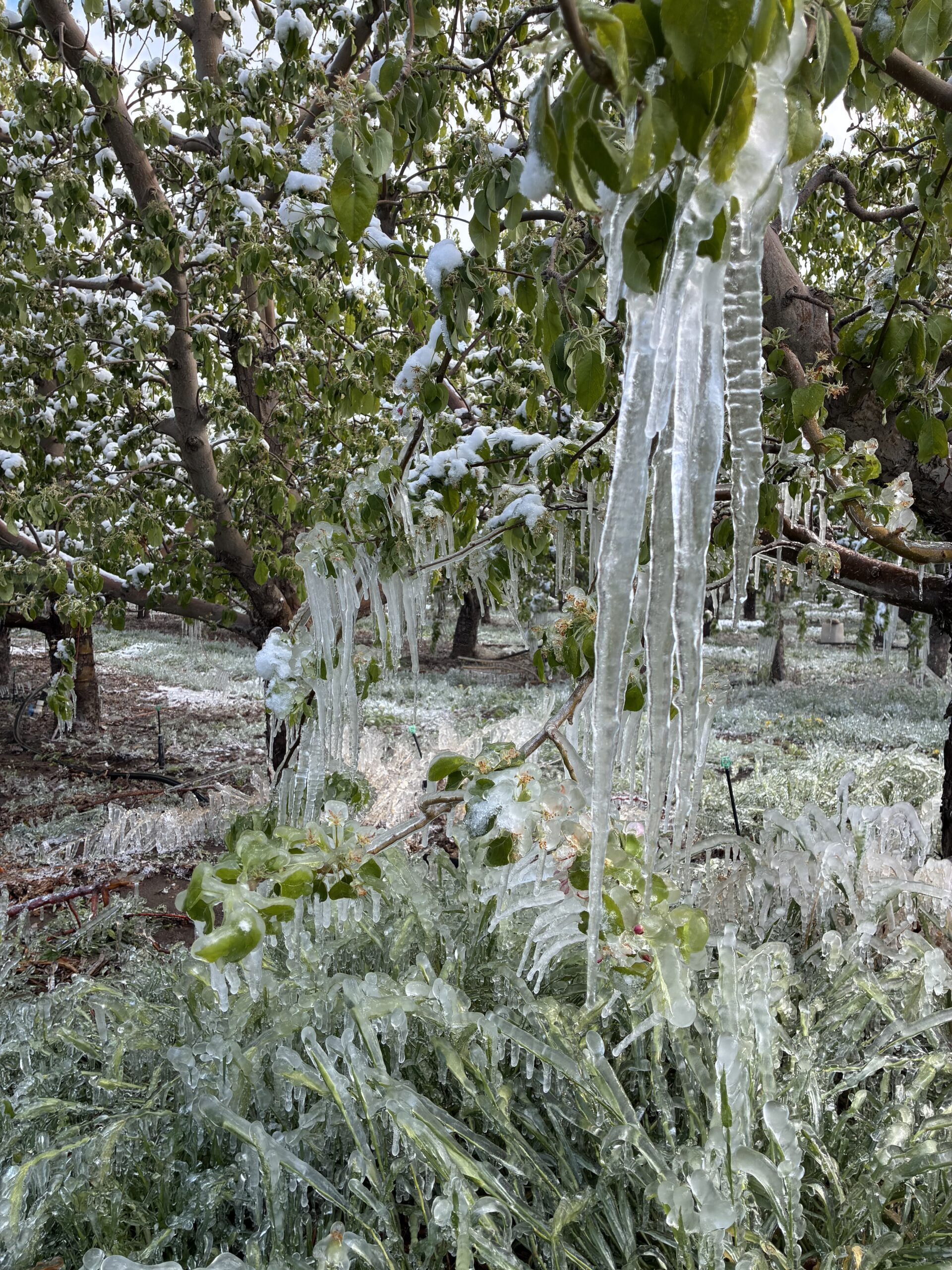
Spring in Utah is usually one of the most hopeful times of year for fruit growers. Orchard trees burst into bloom, bees begin pollinating, and growers start looking ahead to harvest season. But this year, several rounds of freezing temperatures arrived at the worst possible time — damaging blossoms and reducing the fruit crop in many orchards across the state.
While some orchards may still have limited harvests, others may see very little fruit this season. We want our communities to understand what that means, what work still happens in the orchards every day, and what fruit will still be available in the months ahead.
One Cold Night Can Change an Entire Season
Fruit trees are especially vulnerable during bloom. When temperatures drop below freezing after trees have blossomed, delicate flowers and young fruit can be damaged in just a few hours. Even healthy-looking trees may no longer produce a full crop once those blossoms are lost.
This spring, many Utah growers spent long nights monitoring temperatures, running irrigation systems, using wind machines, and doing everything possible to protect their orchards from the cold. Despite those efforts, some varieties and growing regions experienced significant losses.
Still, the trees themselves remain alive and healthy. And the work of farming continues.
Orchards Require Year-Round Care — Even in a Light Crop Year
One of the biggest misconceptions about fruit farming is that the work only happens during harvest. In reality, orchards require constant care throughout the entire year, whether the crop is large or small.
Growers continue:
- pruning and training trees
- irrigating and maintaining soil health
- managing pests and disease
- mowing and maintaining orchard floors
- repairing equipment and infrastructure
- thinning surviving fruit
- protecting next year’s buds and tree health
Even in a year with little harvest, growers are investing time, labor, and resources into keeping orchards productive for future seasons.
For many farm families, this is not just a business — it is a legacy passed down through generations.
What Fruit Will Be Available This Year?
Although some crops were heavily impacted, there will still be fruit available throughout the season.
Availability will vary by orchard and region, checking with your local grower is recommended.
In addition, some farm stands and markets may also offer fruit sourced from trusted neighboring growers in nearby states such as Idaho, Colorado, Washington, or California.
This allows orchards and fruit stands to continue serving their communities while supporting regional agriculture during a difficult growing season.
We know many families look forward to local fruit traditions every summer, and growers are working hard to provide the best quality fruit possible wherever it comes from.
Supporting Local Orchards Matters More Than Ever
Years like this remind us how dependent agriculture is on weather and how much risk growers face each season. Supporting local orchards — whether through fruit purchases, baked goods, cider, jams, events, or simply visiting farm stands — helps ensure these farms remain part of Utah communities for generations to come.
When you support local growers during difficult seasons, you help preserve:
- family farms
- open agricultural land
- local food production
- rural communities and traditions
Looking Ahead
Farming has always required resilience, patience, and optimism. While this season may look different than most, Utah growers are already caring for next year’s crop and preparing for seasons ahead.
The orchard story continues — even in years when nature brings unexpected challenges.
We are grateful for the continued support of our communities and look forward to welcoming you to orchards, farm stands, and markets across Utah this season.